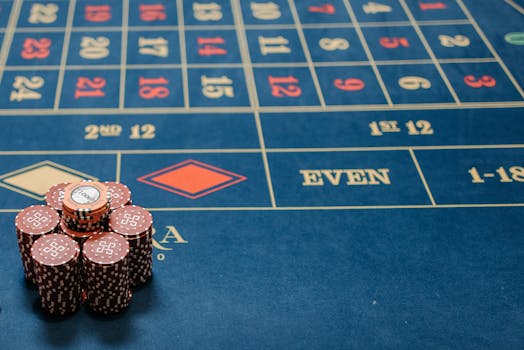
Gambling and betting games have captivated people for centuries, offering the tantalizing possibility of instant wealth alongside the undeniable risk of loss. From the spinning roulette wheel in Monte Carlo to the click of a mouse on an online sportsbook, the thrill of chance draws millions worldwide. Yet, beneath the glitz and excitement lies a fundamental truth: risk is the engine that powers every gambling activity. Understanding the mechanics of risk—how it is calculated, managed, and sometimes exploited—is crucial for anyone who participates in gambling or betting games, whether casually or with more serious intent.
This article explores the many facets of risk in gambling and betting games, demystifying how odds work, why the house always has an edge, and how players can make informed decisions. By unpacking the mathematics, psychology, and practical realities of risk, readers will gain a clearer perspective on playing responsibly and enjoying the experience without falling prey to common pitfalls.
What Is Risk in Gambling? The Core Concepts Explained
Risk, in its simplest form, is the possibility of losing something of value—usually money—in the pursuit of a potential reward. In gambling, risk is not just about winning and losing; it is about probability, uncertainty, and the nature of the games themselves.
.png)
Every gambling or betting game is built on probabilities. For example, in a standard deck of 52 cards, the odds of drawing an ace are 4 in 52, or about 7.7%. Roulette offers 37 or 38 possible outcomes (depending on whether you play European or American), but the payouts are structured so that, over time, the house wins more often than it loses.
Key concepts that define risk in gambling include:
- $1: The likelihood of a particular outcome, expressed as a percentage or fraction. - $1: The degree to which actual results deviate from expected outcomes, which explains why luck can swing wildly in the short term. - $1: The built-in advantage that casinos or bookmakers hold over players, ensuring their profitability over the long run. - $1: The average amount a player can expect to win or lose per bet if they were to make the same wager many times.Understanding these core ideas is the foundation for smart play, whether at a poker table or when placing a bet on your favorite sports team.
The Mathematics Behind Gambling Risks: Odds, House Edge, and Expected Value
Numbers lie at the heart of every gambling game. While luck plays a role in the short term, mathematics determines the long-term outcomes. Let’s break down the key elements:
1. $1: Odds are a way of expressing how likely an event is to occur. For instance, in European roulette, the chance of hitting a specific single number is 1 in 37, or 2.7%. If the casino pays 35 to 1 on a win, the payout is less than the true odds, giving the house an advantage. 2. $1: This is the mathematical advantage that the gambling operator has over the player. For example: - European roulette has a house edge of about 2.7% - American roulette’s house edge jumps to 5.26% due to the extra '00' pocket - Slot machines typically have a house edge between 2% and 15%, depending on the game 3. $1: EV is calculated by multiplying each possible outcome by its probability and summing the results. A negative EV means that, on average, a player will lose money over time. For example, betting $1 on a single number in European roulette has an EV of about -$0.027 (a loss of 2.7 cents per $1 bet).Below is a table comparing the house edge of some popular games:
| Game | House Edge (%) | Odds of Winning |
|---|---|---|
| European Roulette | 2.7 | 1 in 37 (single number) |
| American Roulette | 5.26 | 1 in 38 (single number) |
| Blackjack | 0.5 to 2 | Varies by strategy |
| Baccarat (Player Bet) | 1.24 | 44.6% |
| Slot Machines | 2 to 15 | Varies greatly |
| Sports Betting | 4 to 6 (average) | Varies by event |
These numbers illustrate that no game is truly “fair” in the long run; the house always maintains a statistical edge.
The Psychology of Risk: Why We Gamble Despite the Odds
If the math is stacked against players, why do people continue to gamble? The answer lies in human psychology. Our brains are hardwired to enjoy risk and reward, often in ways that defy logic.
- $1: Players often believe they can influence outcomes in games of chance. This is especially common in games like craps or sports betting, where skill or “hot streaks” seem possible. - $1: Slot machines and lottery games frequently present near-miss outcomes, triggering the brain’s reward centers almost as strongly as a win. This keeps players engaged even after a loss. - $1: After a losing streak, many gamblers double down in hopes of recovering losses, a behavior known as “loss chasing.” Statistics show that this dramatically increases the risk of deeper financial trouble. - $1: The excitement, camaraderie, and entertainment value of gambling often outweigh the rational understanding of the odds.A 2023 study by the National Council on Problem Gambling found that approximately 2.5% of adults in the United States (roughly 8 million people) experience moderate to severe gambling problems, highlighting the powerful psychological pull of risk-taking.
Managing Risk: Strategies for Safer Gambling and Betting
While it’s impossible to eliminate risk entirely from gambling, there are practical steps players can take to manage it effectively:
- $1: Decide in advance how much money you can afford to lose, and stick to it. According to the UK Gambling Commission, players who set strict budgets are 60% less likely to experience gambling-related harm. - $1: Take time to learn the rules, odds, and strategies. Knowledge reduces risk and increases enjoyment. - $1: Many online casinos and betting sites offer tools to set deposit, loss, or time limits. Use these to maintain control. - $1: Accept losses as part of the game. Chasing them often leads to bigger problems. - $1: Regular breaks reduce impulsivity and help maintain perspective. - $1: If gambling stops being fun or causes stress, seek support from organizations like Gamblers Anonymous or local helplines.By applying these strategies, players can reduce the negative impact of risk and maintain a healthy relationship with gambling.
Risk in Sports Betting vs. Casino Games: Key Differences
Not all gambling risks are created equal. Sports betting and casino games offer different risk profiles due to their underlying structures:
- $1: Outcomes are influenced by real-world events, player performance, and unpredictable factors like weather or injuries. While knowledge and skill can improve odds, the bookmaker’s “vig” (commission) ensures a long-term edge. - $1: These rely on fixed probabilities and random number generators. While some games, like blackjack or poker, allow for skillful play, most outcomes are determined by chance and house rules.Let’s compare the two in terms of risk factors:
| Aspect | Sports Betting | Casino Games |
|---|---|---|
| Influence of Skill | Moderate to High | Low to Moderate |
| House Edge | 4-6% (average) | 0.5-15% (varies) |
| Predictability | Low (many variables) | High (fixed probabilities) |
| Impact of Luck | High (short term) | Very High (per game) |
| Possibility to “Beat the House” | Possible, but difficult | Rare (except with card counting/poker) |
Understanding these differences can help players choose games that best align with their risk tolerance and interests.
The Role of Regulation and Responsible Gambling Initiatives
With the growth of online gaming and the increasing accessibility of betting platforms, regulatory bodies play a crucial role in managing risk and protecting players.
- $1: In 2024, more than 100 countries have specific agencies regulating gambling operations, ensuring fairness and transparency. - $1: Governments and industry bodies require operators to offer self-exclusion options, deposit limits, and access to support services. - $1: Campaigns aimed at promoting responsible gambling have been shown to reduce problematic play by as much as 30%, according to a 2022 study by the European Gaming and Betting Association.These measures are vital in balancing the excitement of gambling with the need to minimize harm and ensure a safe environment for all players.
Final Thoughts: Embracing Informed Play in Gambling and Betting
Gambling and betting games are thrilling precisely because of the risk they involve. By understanding how risk operates—from the mathematics of house edge and odds to the psychological factors that keep us coming back—players can make smarter choices and enjoy games in a safer, more responsible way. Whether you’re spinning the reels, placing a sports bet, or trying your hand at blackjack, knowledge is your best ally. Remember, the only sure bet is that the house always wins in the long run—so play for entertainment, not as a way to make money.