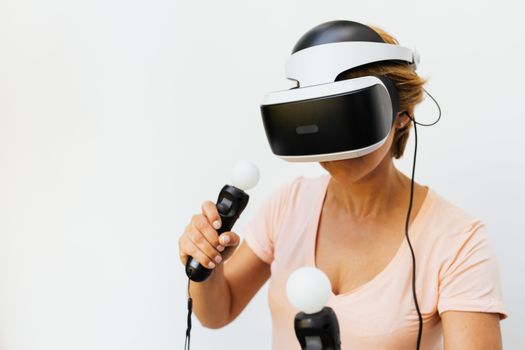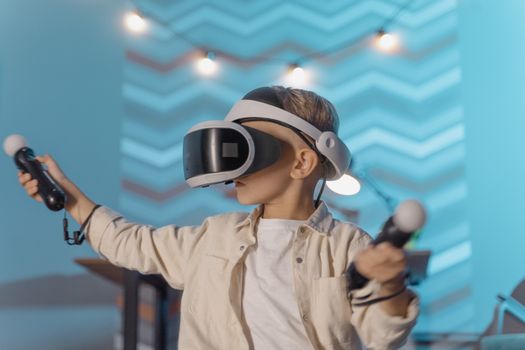
Virtual reality (VR) is no longer a distant dream from science fiction. In the last decade, it has taken center stage in the gaming world, revolutionizing how players interact, perceive, and immerse themselves in digital universes. Today, VR headsets like the Meta Quest 3, PlayStation VR2, and Valve Index are pushing the boundaries of what's possible in gaming. But how exactly is virtual reality transforming gaming experiences? Let’s dive deep into the remarkable shifts VR has brought to the gaming landscape, with real-world examples, key statistics, and a look at what the future holds.
The Leap from Passive to Active Participation
Traditional gaming, even with cutting-edge graphics and sophisticated controls, is fundamentally a 2D experience. Players use controllers, keyboards, or touchscreens to guide avatars through virtual worlds, always aware of the barrier between themselves and the game. VR erases much of that barrier.
With VR, players become active participants. The physical act of turning your head, moving your hands, or even walking allows for direct interaction with the game environment. For example, in "Beat Saber," a rhythm game, players slice through blocks to the beat of the music, physically swinging their arms in real space. In "Half-Life: Alyx," the act of reloading a gun or opening a door requires real hand motions, making the in-game experience feel visceral.
.png)
A 2023 study by the Entertainment Software Association found that 71% of VR gamers reported a greater sense of "being inside the game" compared to just 28% of non-VR gamers. This immersive participation is fundamentally changing what it means to play and experience games.
Social Connectivity and Multiplayer Evolution
While gaming has long been a social activity, VR amplifies this dimension in ways flat screens never could. Multiplayer VR titles like "VRChat," "Rec Room," and "Echo VR" let users meet, talk, and collaborate in 3D spaces. Unlike traditional voice chat, VR allows for body language, eye contact, and spatial audio, making interactions feel more lifelike.
For example, "VRChat" boasts over 25,000 concurrent users at peak times as of 2024, with players joining from all over the world to hang out, play mini-games, or attend virtual concerts. In 2022, Meta reported that users spent over $1 billion on VR content in its Meta Quest ecosystem, much of it on social and multiplayer experiences.
The sense of presence in VR means friendships forged in these worlds often feel as meaningful as those formed in real life. This has led to new communities, virtual clubs, and even digital economies, with players trading virtual goods and services.
Expanding Genres and New Game Mechanics
VR doesn’t just enhance existing genres; it enables entirely new kinds of gameplay. Before VR, genres like simulation and horror were constrained by the limits of screens and controllers. Now, these genres are flourishing in ways never before possible.
Consider the horror genre: In VR, the scares are more intense because the player’s senses are fully engaged. Games like "Phasmophobia VR" and "The Exorcist: Legion VR" immerse players in haunted environments where every creak and whisper feels dangerously close.
Simulation games have also found new life in VR. Flight simulators like "Microsoft Flight Simulator VR" offer cockpit realism, with pilots able to look around, flip switches, and feel the vastness of the sky. Sports games such as "Eleven Table Tennis" or "The Climb 2" use natural motion controls to mimic the real experience, leading to more authentic and challenging gameplay.
Moreover, VR’s unique input devices—motion controllers, haptic gloves, even treadmills—have given rise to mechanics like hand-tracking, object manipulation, and full-body movement. Every gesture can have meaning, from picking up an object to dodging an attack, creating a level of interactivity that’s simply not possible on traditional platforms.
Accessibility and Inclusion: Opportunities and Challenges
Virtual reality has the potential to make gaming more accessible, but it also presents new challenges. On the positive side, VR can be transformative for individuals with mobility or sensory differences. For example, the game "The Under Presents" allows for seated play and has a mode for players with limited mobility. Headsets like the Quest 3 offer adjustable straps and custom fit options.
However, VR is not universally accessible yet. The cost remains a barrier: as of early 2024, a Meta Quest 3 costs around $499, while high-end PC VR setups can exceed $1,000. Additionally, some players experience motion sickness, with studies estimating that up to 25% of first-time users report discomfort during extended play sessions.
Developers are responding by adding more comfort options, customizable controls, and play modes. The push for accessibility has led to innovations such as one-handed controls, adjustable locomotion systems, and support for sitting or standing play.
Comparing VR to Traditional Gaming: Key Differences
To better understand the impact of VR, let’s compare it to traditional gaming across several important dimensions.
| Aspect | Traditional Gaming | Virtual Reality Gaming |
|---|---|---|
| Immersion | Limited to visuals and audio on a flat screen | 360-degree immersion with head tracking, spatial audio, and interactive environments |
| Physical Engagement | Button presses, joystick, keyboard/mouse | Full-body movement, hand gestures, motion tracking |
| Social Interaction | Voice/text chat, avatar-based lobbies | Body language, eye contact, spatial audio, 3D avatars |
| Accessibility | Accessible via common devices; lower cost | Higher hardware cost; evolving accessibility features |
| Genres | Vast; some genres limited by hardware | New genres (e.g., immersive simulations, physical puzzle games) emerging |
| Market Size (2023) | Estimated $184 billion globally | Estimated $9.6 billion (VR segment) |
As the table shows, VR is carving out its own space in the broader gaming market, with unique strengths and some notable challenges.
The Real-World Impact: Case Studies and Success Stories
The transformative power of VR can be seen in individual stories and industry trends alike.
In education, VR games like "Tilt Brush" and "Wander" are being used in schools to teach creativity, geography, and history in interactive ways. In 2023, over 6,000 schools worldwide reported using VR as part of their curriculum.
Professional eSports has also begun to embrace VR. The VR League, established in 2017, now hosts international competitions in games like "Echo Arena" and "Onward," with prize pools surpassing $250,000 in 2023.
Rehabilitation centers are using VR games to help patients recover motor skills. For example, the game "Fruit Ninja VR" is used in physical therapy to encourage arm movement and coordination.
Even mainstream franchises are taking the plunge. In 2023, "Resident Evil 4 VR" sold over 1 million copies in its first six months, demonstrating the appetite for high-quality, immersive experiences among gamers.
The Road Ahead: The Future of VR in Gaming
The future of VR gaming looks promising, with rapid technological advances on the horizon. Analysts at Statista project that the VR gaming market will grow at a compound annual rate of 31% through 2027, reaching an estimated $33 billion.
Hardware is becoming more affordable and accessible. The Meta Quest 3, for example, offers standalone VR with no need for a PC, while PlayStation VR2 brings high-fidelity experiences to console gamers. Wireless technology and lighter headsets are addressing comfort and accessibility concerns.
Software is evolving too. AI-driven NPCs, persistent virtual worlds, and cross-platform experiences are on the rise. Major studios are investing in VR-exclusive content, and indie developers are experimenting with new forms of interactive storytelling.
As VR technology matures, it’s likely that the line between the real and virtual will continue to blur. The next decade could see VR becoming as ubiquitous as consoles or mobile phones, with gaming experiences that are truly indistinguishable from reality.
Exploring the Transformative Power of Virtual Reality in Gaming
Virtual reality is fundamentally changing the way we play, connect, and experience games. From turning players into active participants, creating lifelike social spaces, enabling new genres, and challenging the boundaries of accessibility, VR is redefining the gaming experience. While challenges remain—especially regarding cost and comfort—the momentum is undeniable. With billions invested and millions of players diving into new worlds, VR gaming is poised to become a central pillar of the industry. The next time you put on a headset, remember: you’re not just playing a game—you’re stepping into a new reality.