The Future of Gaming: What Technologies Await Us in Virtual Games
The world of gaming is on the verge of a revolutionary transformation. Over the past decade, virtual games have evolved from simple pixelated pastimes to immersive digital universes that captivate millions. As we look to the future, a new wave of technologies promises to redefine not just how we play, but also how we experience, interact, and even exist within games. From hyper-realistic graphics and artificial intelligence to the integration of brain-computer interfaces, the next generation of gaming will blur the line between reality and imagination. So, what does the future hold for virtual games? Let’s explore the groundbreaking technologies set to reshape the gaming landscape.
The Rise of Hyper-Realistic Graphics and Rendering
One of the most noticeable advancements in gaming has always been visual fidelity. In 2023, the gaming industry generated approximately $184 billion globally, largely driven by the constant push for more realistic graphics. With the arrival of real-time ray tracing, powered by GPUs like NVIDIA’s RTX 4000 series, lighting, reflections, and shadows appear more lifelike than ever before. But the future promises even more.
By 2026, experts predict that photorealistic rendering—where virtual scenes are indistinguishable from real life—will become the new standard. Technologies such as Unreal Engine 5 are already showcasing what’s possible, with dynamic lighting, high-resolution textures, and pixel-perfect details. Combined with AI-powered upscaling and procedural generation, games will soon offer worlds so immersive and detailed that players may struggle to tell the difference between digital and physical environments.
.png)
Artificial Intelligence: Smarter Worlds and Personalized Experiences
Artificial intelligence is poised to become the backbone of future gaming experiences. While AI-driven opponents and NPCs (non-player characters) have been around for years, next-generation AI will enable virtual worlds that feel truly alive. According to a 2024 report by Newzoo, 80% of game developers believe AI will be a major driver of innovation in the next five years.
Imagine NPCs that remember your actions, adapt to your strategies, and evolve over time. AI will also personalize gameplay, adjusting storylines, difficulty, and even environments based on individual player preferences and behaviors. Companies like Ubisoft and Microsoft are investing heavily in AI research for gaming, aiming to create dynamic narratives that respond in real time to player decisions.
Moreover, AI-powered content creation tools will empower both developers and players to generate new levels, characters, and missions with minimal coding. This democratization of game creation could lead to an explosion of user-generated content, keeping games fresh and endlessly replayable.
Virtual Reality (VR) and Augmented Reality (AR): Next-Level Immersion
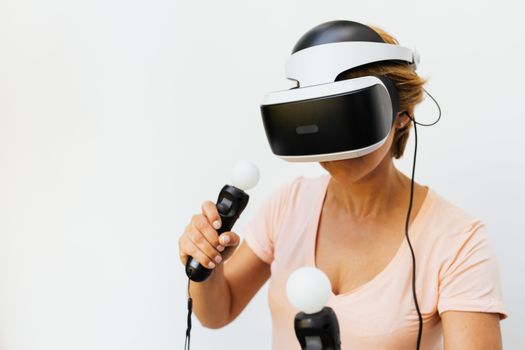
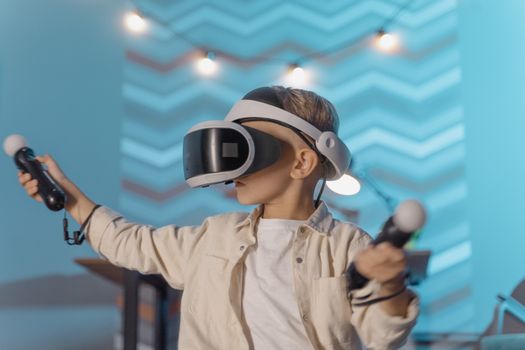
Virtual reality and augmented reality are set to revolutionize how we experience games. In 2023, the global VR gaming market was valued at $15.8 billion, and it’s projected to reach $53.4 billion by 2028—a staggering 238% increase in just five years. Devices like Meta Quest 3 and Sony PlayStation VR2 have lowered barriers to entry, offering wireless freedom, improved resolution, and more comfortable designs.
The next leap will come from full-body tracking and haptic feedback systems. Companies such as Valve and HaptX are developing suits and gloves that let players feel textures, impacts, and even temperature changes within virtual worlds. Meanwhile, AR games like Pokémon GO showed the potential for blending digital and real environments; future AR glasses will overlay interactive game elements seamlessly into our daily lives, transforming entire cities into playgrounds.
Below is a comparison table of current and upcoming VR/AR technologies:
| Technology | Current Example | Future Development | Key Feature |
|---|---|---|---|
| VR Headsets | Meta Quest 3 | Apple Vision Pro (2024) | Ultra-high resolution, eye-tracking |
| Haptic Suits | HaptX Gloves | Full-body Teslasuit | Tactile feedback, temperature simulation |
| AR Glasses | Microsoft HoloLens 2 | Google AR Glasses (TBA) | Lightweight, real-world interactivity |
Cloud Gaming and the End of Hardware Limitations
Cloud gaming, sometimes called “gaming-as-a-service,” is rapidly changing how we access and play virtual games. Rather than relying on expensive consoles or high-end PCs, cloud platforms like NVIDIA GeForce NOW, Xbox Cloud Gaming, and Google Stadia (before its sunset) allow players to stream games directly to any device with an internet connection.
A 2023 survey found that 23% of gamers in North America and Europe have tried cloud gaming, and this number is expected to surpass 40% by 2026. This shift could make high-quality gaming more accessible, especially in regions where gaming hardware is prohibitively expensive.
Future advancements in 5G and upcoming 6G networks will drastically reduce latency and increase bandwidth, making lag-free streaming a reality. Players could jump into massive, AAA-quality virtual worlds on smartphones, tablets, or even smart TVs—no downloads, patches, or upgrades needed. This democratization of gaming will open new markets and expand the global gaming community.
Brain-Computer Interfaces: The Ultimate Controller
Perhaps the most futuristic—and potentially disruptive—technology on the horizon is the brain-computer interface (BCI). In 2024, companies like Neuralink and NextMind are making headlines with devices that translate neural signals into digital commands. While still in early stages, BCIs have already allowed users to play basic games using only their thoughts.
The potential applications are staggering. Imagine controlling your character, casting spells, or exploring virtual worlds simply by thinking about it. For gamers with physical disabilities, BCIs could provide entirely new ways to interact, breaking down accessibility barriers. As research advances, future virtual games may offer direct brain-to-game communication, creating experiences that are more intuitive and immersive than anything possible with traditional controllers.
Social and Shared Virtual Worlds: The Metaverse and Beyond
The concept of the metaverse—a persistent, shared digital universe—has captured the imagination of both gamers and tech giants. Platforms like Roblox, Fortnite, and Meta’s Horizon Worlds are early examples, hosting concerts, social events, and even virtual economies.
By 2030, it’s estimated that over 1 billion people could be active participants in metaverse-like environments. These interconnected worlds will be powered by decentralized technologies, blockchain-based assets, and real-time communication tools. Virtual games will become not just places to play, but spaces to work, learn, socialize, and create. Digital ownership of in-game assets, secured by NFTs (non-fungible tokens), will allow players to buy, sell, and trade unique items across games and platforms.
Social VR and metaverse experiences will also benefit from advances in avatar realism, voice synthesis, and cross-platform compatibility, making virtual interactions as meaningful as real-life connections.
Final Thoughts: The Infinite Possibilities of Future Virtual Games
The future of gaming is both thrilling and unpredictable. As we stand on the brink of a new era, the technologies discussed—hyper-realistic graphics, advanced AI, VR/AR, cloud gaming, brain-computer interfaces, and the metaverse—promise experiences that were once the stuff of science fiction. These innovations will make virtual games more immersive, accessible, and socially connected than ever before.
Yet, with these advancements come important questions about privacy, accessibility, and digital ethics. How will developers and communities ensure that these powerful new tools are used responsibly? And how will the definition of “reality” itself change as virtual and physical worlds continue to merge?
One thing is certain: The next decade will be a golden age for gaming, full of opportunities for players, creators, and innovators alike. Whether you’re a casual gamer or a dedicated enthusiast, the future of virtual games is a journey worth watching—and playing.